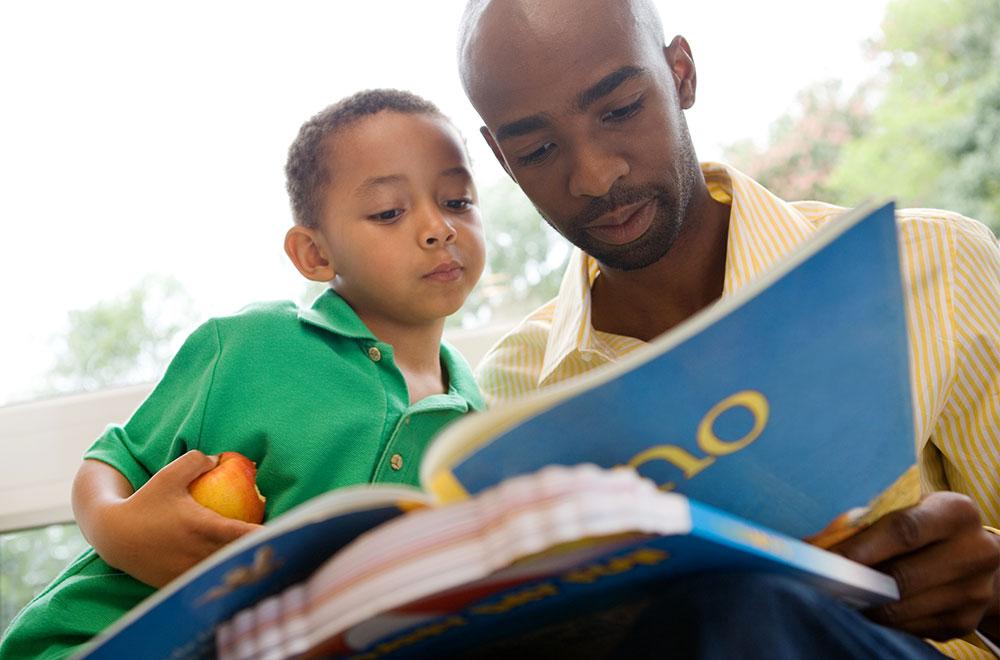
Reading aloud is one of the most important things parents can do with their children. Reading aloud builds many important foundational skills, introduces vocabulary, provides a model of fluent, expressive reading, and helps children recognize what reading for pleasure is all about.
What you'll find here:
- Connecting Read Alouds with Hands-On Activities
- Great Read Alouds for Kids: Babies to Grade 3
- Tips on Reading Aloud
- When English Is Not the Home Language
Connecting Read Alouds with Hands-On Activities
Join us for an active summer afternoon at the Ruby Tucker Family Center in Alexandria, Virginia. Kids and volunteers come together around books in this year-round reading program developed by The Reading Connection, a local literacy organization.
Personal connections and new vocabulary
Farms and farming are the themes for the day. Watch how volunteer Shakara Helaire engages the kids in active conversation about vegetables, and how an outdoor "milking station" turns into a memorable way to learn new vocabulary words like "pasteurizing."
Great read alouds for kids: babies to grade 3
It’s a busy life filled with lots of things to do and even more distractions. But there’s one pursuit that can be fun for everyone involved, plus it has benefits that will have a lifelong impact. All that’s needed is a comfy place, an adult, one child or more, and a good book to share.
Great Read Alouds for Kids: Babies to Grade 3 ›
Related: How to Choose Read Aloud Books: Babies to Third Graders ›
Tips on reading aloud
How Can Something as Simple as Reading to a Child Be So Effective?
We read to children for all the same reasons we talk with children: to reassure, to entertain, to bond; to inform or explain, to arouse curiosity, to inspire. But in reading aloud, we also condition the child's brain to associate reading with pleasure, create background knowledge, build vocabulary, and provide a reading role model. How Can Something as Simple as Reading to a Child Be So Effective? ›
Getting the Most Out of Nonfiction Reading Time
Nonfiction books give kids a chance to learn new concepts and vocabulary, as well as broaden their view of the world. Learn how to take a "book walk" with a new nonfiction book and how to model active reading. Getting the Most Out of Nonfiction Reading Time ›
Download PDF: English | Spanish
Sharing Wordless Picture BooksSharing Wordless Picture Books
Sharing wordless books is a terrific way to build important literacy skills, including listening skills, vocabulary, comprehension and an increased awareness of how stories are structured. Here are some tips for sharing wordless picture books with a child. Sharing Wordless Picture Books ›
Download PDF: English | Spanish
How to Read an E-Book with Your Child
Electronic books are becoming more and more commonplace. Here you'll discover practical tips for sharing e-books with your child, and how to keep the focus on reading and the story. How to Read an E-Book with Your Child ›
Download PDF: English | Spanish
Simple Yet Powerful Things to Do While Reading Aloud
To get the most out of a shared reading, encourage your child to appreciate the pictures, and also guide their attention to printed words. Doing so may help your child's reading, spelling, and comprehension skills down the road. Simple Yet Powerful Things to Do While Reading Aloud ›
Download PDF: English | Spanish
The Importance of Reading Widely
Sharing lots of different kinds, or genres, of books with your child exposes him to different words, different kinds of images, and whole new worlds. This tip sheet suggests some genres to try with your young reader that complement 'traditional' fiction. Some are suggestions for read alouds, while others may be ones your child can read on his own. The Importance of Reading Widely ›
Download PDF: English | Spanish
Poems at Home
Sharing poetry with kids is a great way to highlight language. Poems include humor, interesting words, tongue twisters, alliteration, and opportunities for choral reading among other important literacy concepts. This article provides guidelines for a family poetry jam — a great way to promote literacy and togetherness in your own home. Poems at Home ›
Download PDF: English | Spanish
Use a PEER When You Read Aloud
The best story times are very interactive: You are talking about and reading the story, your child is talking, and there is conversation taking place between the two of you. Read below to learn more about dialogic reading and PEER, a method to help you remember a few important ways to read in this interactive way. Use a PEER When You Read Aloud ›
Download PDF: English | Spanish
Picture This! Using Mental Imagery While Reading
One way to help a child comprehend what he is reading is to encourage him to visualize parts of the story in his mind. These "mind movies" help clarify information, increase understanding, and can include any of the five senses. Try these practices below when reading with your child. Picture This! Using Mental Imagery While Reading ›
Download PDF: English | Spanish
Reading Aloud to Build Comprehension
Children learn when they make connections between what they hear and what they know. One method parents can use to help make these connections is called a think aloud, where you talk through your thoughts as you read. Here are three ways to use think alouds, with examples from some of our favorite kids' books. Try these ideas to expand learning and to improve reading comprehension. Reading Aloud to Build Comprehension ›
Download PDF: English | Spanish
Mission Critical: Reading Together to Build Critical Thinking Skills
Critical thinking, the ability to think deeply about a topic or a book, is an essential skill for children to develop. Here are some helpful tips and recommended books to strengthen your child's ability to think critically. Mission Critical: Reading Together to Build Critical Thinking Skills ›
Download PDF: English | Spanish
When English is not the home language
Reading with Your Child
This brief WNET Parenting Minute video describes the importance of reading to children in whatever language you are most comfortable. It highlights the fact that reading to children is an important part of their development and can help children improve their reading skills and succeed in school. (Also available in Spanish, Bengali, and Chinese.)
Bilingual Books
Bilingual books can help children learn new words in their non-native language — either by seeing the Spanish and English words side-by-side or by guessing word meaning through context. Bilingual books are a wonderful addition to a child's bookshelf — offering a window or mirror into cultural awareness and pride. Here, you'll find a collection of books with both English and Spanish text, as well as video interviews with bilingual children's authors.
Reading Tip Sheets for Parents in Multiple Languages
Our one-page parent tips offer easy ways for parents to help kids become successful readers. Although we've divided these tips by age, many of them can be used with children at various ages and stages — we encourage you to choose the ones that work best for your child. We have tip sheets for parents of preschoolers, kindergarteners, first graders, second graders, and third graders.
Available in English and 12 other languages: Spanish, Portuguese, French, Arabic, Traditional Chinese, Haitian Creole, Hmong, Korean, Navajo, Russian, Tagalog, and Vietnamese.
Reading Tip Sheets for Parents in Multiple Languages ›
Why Reading to Your Kids in Your Home Language Will Help Them Become Better Readers
As a parent, you may be wondering whether you should be reading to your children in Spanish or English. This article provides suggestions of ways that you can help your child develop his or her literacy skills in your family's native language and explains the research behind the recommendations.
Why Reading to Your Kids in Your Home Language Will Help Them Become Better Readers ›
Celebrate Reading in Two Languages: An English/Spanish Bilingual Booklist
Some of the books on this list are bilingual, meaning that you will find both English and Spanish within the same book. Other titles are originally in English, and have a Spanish translation available. The links to Amazon.com provide more information about each book.
English/Spanish Bilingual Booklist ›